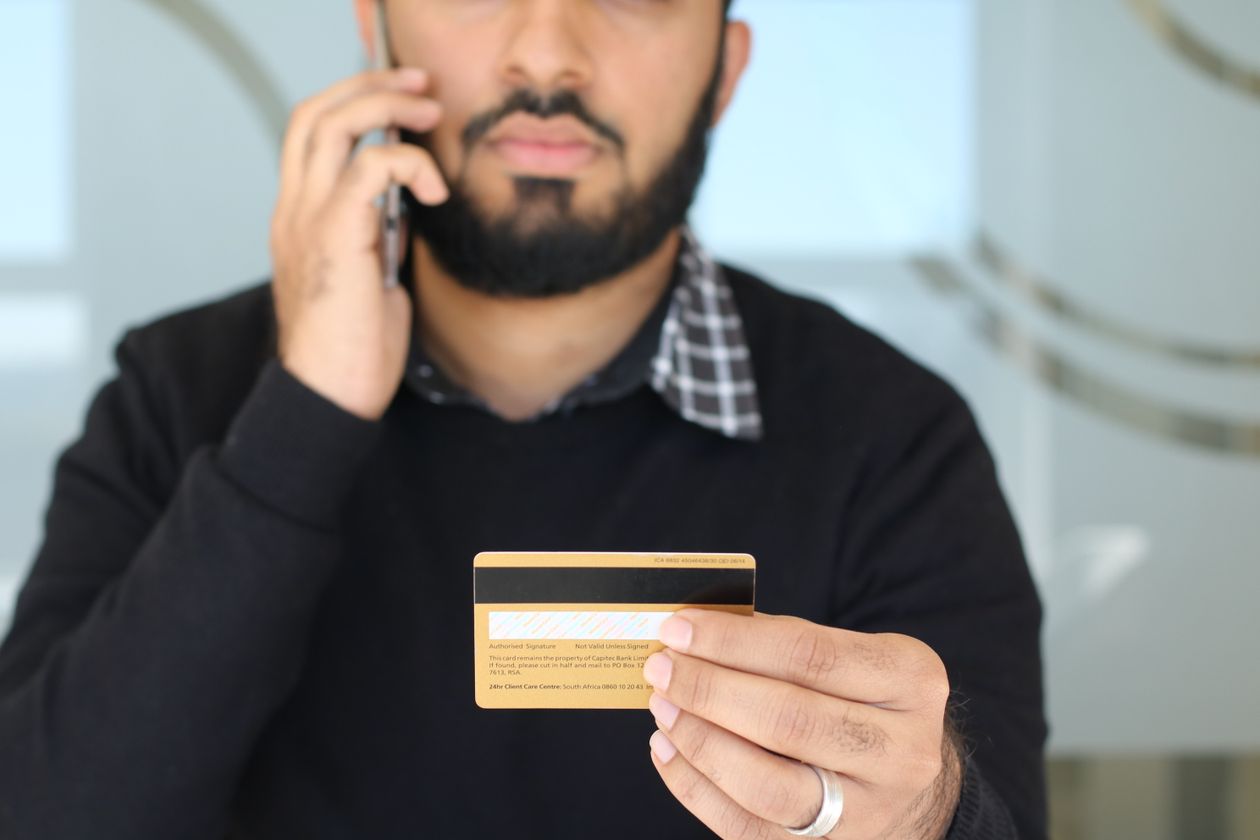
Getting your first credit card in India feels complicated — banks want a salary slip, a CIBIL score, two years of ITR, and a blood oath. But there's a smarter way in. This guide covers the best first credit cards for beginners in 2026: cards that don't require an existing credit history, what each one actually gives you, and exactly how to apply without wasting a hard inquiry on your CIBIL report.
Whether you're a college student, a fresher in your first job, or someone who has never used credit before, there is a card on this list designed for your situation.
Why Getting a Credit Card Early Matters
Your CIBIL score is built from credit history. If you've never used a credit card or loan, your score is either 0 (NH — no history) or -1 (NA — not applicable). Banks read this as risk, not neutrality, and reject applications for better cards, home loans, and personal loans later on.
The single fastest way to build a healthy CIBIL score is to get a credit card, use it for small everyday spends, and pay the full outstanding balance before the due date every single month. Do this consistently for 12–18 months and your score will typically cross 750 — the threshold that unlocks premium cards, higher limits, and better loan interest rates.
Starting early is an advantage that compounds over time. Someone who gets their first card at 21 will have a 4-year credit history by 25, while their peers who waited are still building from zero.
Key insight: A credit card used responsibly is one of the cheapest financial tools available. The interest rate is irrelevant if you always pay in full — and the rewards, CIBIL building, and fraud protection are all yours for free.
The 3 Paths Into Your First Credit Card
Banks look at three things when assessing a credit card applicant: income, credit history, and employment type. As a first-timer, you may lack one or more of these. Here are the three routes available to you:
Path 1: FD-Backed Secured Card (No Income, No CIBIL Needed)
You open a Fixed Deposit (FD) with the bank — typically ₹20,000 minimum — and the bank issues a credit card against it. Your credit limit is up to 80% of the FD amount. The FD earns interest while it sits there (usually 6–7% per year), so you're not losing money. This path has no income requirement and no CIBIL score requirement whatsoever. It is the best path for students and anyone with no formal income.
Path 2: Salaried Entry-Level Card (Salary ₹15,000+)
If you have a formal salary of ₹15,000–₹25,000 per month, some banks will approve you for a basic entry-level card. Approval rates are higher if your salary is credited to that bank's account. The credit limit will be low (typically 1–2x monthly salary), but it builds your credit file. See our Best Credit Card for Salaried Employees guide for a full comparison.
Path 3: Add-On Card on a Family Member's Account
If a parent or spouse has a credit card, you can be added as a supplementary cardholder. Spend on the add-on card gets reported to CIBIL, which may help build your own credit profile depending on the bank. It's better than nothing, but Path 1 gives you your own independent credit file from day one.
Best First Credit Cards in India 2026 — Compared
We've filtered the DigiKard catalogue to the cards that genuinely work for first-timers: low or no fee, accessible eligibility, and real rewards from day one.
| Card | Annual Fee | Min. Eligibility | Best For | Top Benefit |
|---|---|---|---|---|
| Axis Bank Insta Easy | Lifetime free | Axis Bank FD of ₹20,000+ | Students & no-income applicants | Guaranteed approval against FD; credit limit = 80% of FD; no income proof needed |
| IDFC FIRST Wealth | Lifetime free | Salary ₹25,000+ | Salaried freshers | 10X rewards on online spends; free airport lounge access; zero annual fee forever |
| Scapia | Lifetime free | Salary ₹20,000+ | Travel & OTT | 10% rewards on travel bookings; zero forex markup abroad; unlimited domestic lounge |
| Pop UPI Credit Card | Lifetime free | Salary ₹15,000+ | Daily UPI spenders | 3% cashback on UPI; works on PhonePe & BHIM; no change in payment behaviour needed |
| Kiwi RuPay Neon | ₹0 card fee + ₹999/yr Neon subscription | CIBIL 750+ or salary ₹20K+ | UPI power users with some credit history | Up to 5% tiered rewards on UPI spend (2% base, 5% at ₹1.5L+ annual UPI) |
Deep Dive: Best Cards for Each Beginner Type
Best for Students and No-Income Applicants: Axis Bank Insta Easy
The Axis Bank Insta Easy credit card is the cleanest FD-backed option in India right now. Open any Axis Bank Fixed Deposit between ₹20,000 and ₹25 lakh, and you get a credit card approved against it — no income proof, no salary slip, no CIBIL score check. Your credit limit is set at 80% of the FD value, so a ₹25,000 FD gives you a ₹20,000 credit limit to start.
The card is lifetime free — zero joining fee, zero annual fee, ever. The FD continues to earn interest (typically 6–7% per year) while it sits pledged, so the actual cost of holding this card is close to zero. Use the card for small monthly spends, pay the full outstanding amount on time, and your CIBIL score will begin building from month one. After 12–18 months of clean history, you'll qualify for unsecured cards with better rewards.
Best for Salaried Freshers (₹25K+ Salary): IDFC FIRST Wealth
If you just started your first job and your salary is ₹25,000 or more, the IDFC FIRST Wealth card is exceptional — and it's lifetime free. There is no annual fee, ever. The rewards rate is strong: 10X reward points on online spends, 3X on offline spends. Points are redeemable for statement credit.
IDFC FIRST also gives you free airport lounge access from day one, complimentary roadside assistance, and a suite of insurance covers. For a first card, this is extraordinarily generous. The caveat is that IDFC FIRST is conservative in approvals — if your salary is below ₹25K or your credit history is very thin, approval odds drop. Read more in our Best Lifetime Free Credit Cards guide.
Best for Daily UPI Spending: Pop UPI Credit Card
Pop UPI is a RuPay-network card that gives 3% cashback on UPI transactions. It's lifetime free with no annual fee and has a low income requirement (₹15,000/month salary). If your entire spending life happens on PhonePe or BHIM UPI, Pop UPI is the simplest card to get and use — you don't even change your payment behaviour, just link the card to your UPI app and start earning. See our Best Credit Card for UPI Payments guide for a full comparison of UPI credit cards.
Best for Travel-Obsessed Freshers: Scapia
If you'll be booking flights and hotels regularly, Scapia is a lifetime-free card that gives 10% ScapiaCash on travel bookings via their platform, zero forex markup on international transactions, and unlimited domestic airport lounge access. Income requirement is ₹20,000/month. Scapia's lounge perk alone is worth ₹800–₹1,200 per airport visit — two visits a year cover what many annual-fee cards would charge.
Best for UPI Power Users with Some Credit History: Kiwi RuPay Neon
The Kiwi RuPay Neon card is excellent for UPI rewards — but it requires a CIBIL score of 750 or above (or a salary of ₹20K+), so it's not for complete beginners with no credit history. If you've already had an FD-backed card for a year and built your score to 750+, Kiwi Neon is worth adding. The card itself is free; the Neon subscription that unlocks enhanced rewards costs ₹999/year. Cashback is tiered: 2% on UPI by default, rising to 3% at ₹50K annual UPI spend, 4% at ₹1L, and 5% at ₹1.5L+ — making it one of the best UPI reward rates available once you've built your credit profile.
Common mistake — applying to multiple banks at once: Every credit card application triggers a "hard inquiry" on your CIBIL report, which can lower your score by 5–10 points per application. When banks see multiple hard inquiries in a short window, they interpret it as financial stress — a red flag that makes further rejections more likely. Apply to one card that fits your profile, wait for the result, and only consider another option if needed. Use DigiKard's eligibility matcher first to find where your approval odds are highest before submitting anything.
What to Expect After Approval
Credit Limit on Your First Card
First-time applicants typically receive a credit limit between ₹10,000 and ₹75,000. FD-backed cards give up to 80% of the deposit as the limit. Salaried cards often start at 1–2x your monthly salary. Don't be discouraged by a low limit — it increases automatically after 6–12 months of clean payment history, or you can request a raise. Our Credit Limit Increase Guide explains exactly how to do this.
Virtual Card: No Branch Visit Needed
Once approved, your bank issues a virtual credit card number instantly — no branch visit needed. You can use it immediately for online purchases, UPI-linked payments, and subscriptions. The physical card arrives by post in 5–7 working days. Activate it online or via the bank's app before using it at POS terminals.
Understanding Your Statement
Your credit card billing cycle is typically 30 days. At the end of each cycle, a statement is generated showing total outstanding. You get 15–20 more days to pay (the grace period), making the total interest-free window 45–50 days. Always pay the full outstanding amount, not the minimum due. Paying only the minimum due means the bank charges interest at 3–3.75% per month (36–45% annually) on the remaining balance. Read our Billing Cycle Explained article if this is unclear.
Step-by-Step: How to Apply for Your First Card via DigiKard
- Check eligibility first — Open DigiKard at /app, enter your phone number and complete the 3-step profile. It takes under 3 minutes and does not affect your CIBIL score.
- See your matched cards — DigiKard shows cards you're actually likely to get approved for, ranked by rewards. No guesswork, no mass-applying.
- Ask FIN.DIGI — DigiKard's AI advisor FIN.DIGI already knows your profile. Ask it "which card should I get first?" and it gives a specific recommendation in plain language, including approval odds.
- Apply to one card only — Click "Apply Now" on your chosen card. DigiKard routes you to the bank's official application. Submit only this one application — each application triggers a hard inquiry on your CIBIL report that can lower your score, so applying to several cards at once works against you.
- Receive your virtual card — Once approved, DigiKard confirms your status and the bank issues a virtual credit card number instantly — no branch visit needed. Your physical card follows by post in 5–7 days.
Ask FIN.DIGI: Your AI Credit Advisor
Not sure which card fits your situation? FIN.DIGI already knows your income, credit profile, and spending patterns from your DigiKard profile. Ask it "what's the best first credit card for me?" — it gives a personalised answer in seconds, not a generic list.
Open FIN.DIGI on DigiKardHow to Use Your First Card to Build CIBIL Fast
Getting the card is step one. Using it correctly is what actually builds your score. Here's the framework that works:
- Keep credit utilisation below 30%. If your limit is ₹20,000, don't let your outstanding balance exceed ₹6,000 at any point in the billing cycle. CIBIL measures the ratio of used credit to available credit — lower is better.
- Pay the full outstanding amount every month, not the minimum. The minimum due keeps you out of default but does nothing for your score and costs you 36–45% annual interest on the rest.
- Set up auto-pay for the full amount. Missing even one payment can drop your CIBIL score by 50–100 points and stays on your record for 3 years.
- Don't close the card too soon. Credit history length matters. Keep your first card open even after upgrading — downgrade it to a free variant if it has a fee, but don't close it.
- Wait before applying for a second card. Give it at least 6 months. Multiple new accounts in a short period flags you as credit-hungry to CIBIL's models.
Follow this for 12–18 months and your score will typically climb from 0/NA to 720–780 — enough to unlock most mid-tier credit cards. Our full CIBIL Score Improvement Guide goes deeper on each of these levers.
What to Do If You Get Rejected
Rejection happens. The important thing is not to panic-apply to 5 more banks — each rejection already left a hard inquiry on your CIBIL report, and adding more makes it worse. Here's the right sequence:
- Get your CIBIL report from cibil.com (one free pull per year) and read the stated rejection reason.
- If the reason is "no credit history" (NH/NA score), go directly for an FD-backed card like Axis Bank Insta Easy. These bypass the CIBIL check entirely — the deposit is the collateral.
- If the reason is "low CIBIL score", check the report for errors first. Dispute any incorrect entries directly with CIBIL. Then use an FD-backed card to begin rebuilding your score from scratch.
- Wait 3–6 months before your next application to let the recent hard inquiries age and your profile stabilise.
You can also describe your rejection scenario to DigiKard's FIN.DIGI — it will point you to the most likely next step based on your actual profile.
Recommended Cards from DigiKard
Axis Bank Insta Easy
FD-backed from ₹20K. Lifetime free. No income proof or CIBIL score needed. Credit limit = 80% of FD. Guaranteed approval path for first-timers.
IDFC FIRST Wealth
Zero annual fee forever. 10X rewards on online spends. Free airport lounge access. Best first card for salaried freshers earning ₹25K+.
Pop UPI Credit Card
3% cashback on all UPI payments. Lifetime free. Works on PhonePe & BHIM. Income requirement ₹15K/month. Zero learning curve if you already pay via UPI.
Scapia
Lifetime free. 10% travel rewards via Scapia platform. Zero forex markup abroad. Unlimited domestic lounge access from day one. Income ₹20K+.
Kiwi RuPay Neon
Up to 5% tiered rewards on UPI spend. ₹999/yr Neon subscription for enhanced rate. Best once you've built your score to 750+ on an FD card.
Not Sure Which Card Is Right for You?
DigiKard matches you to cards based on your actual profile — income, spending habits, and approval odds. Takes 3 minutes. No CIBIL impact.
Find My First Card →Frequently Asked Questions
Can a student get a credit card in India without income proof?
Yes. Students can get a credit card against a Fixed Deposit (FD-backed card) with as little as ₹20,000 in the FD. The credit limit is typically 80% of the FD amount. The Axis Bank Insta Easy credit card is a popular option — it is lifetime free, requires no income proof, and is approved against any Axis Bank FD between ₹20,000 and ₹25 lakh.
What is the minimum age to apply for a credit card in India?
The minimum age is 18 years. However, most banks require applicants to be at least 21 for salaried credit cards. For FD-backed or secured cards, some banks accept 18+ applicants.
Will I get rejected if I have no credit history?
Not necessarily. Banks can reject you for a regular unsecured credit card if you have no CIBIL history, but FD-backed secured cards like Axis Bank Insta Easy bypass this entirely — the deposit is the collateral and no credit score is checked. Once you use an FD-backed card responsibly for 12–18 months, you'll build a credit history and become eligible for premium unsecured cards.
Why should I apply to only one credit card at a time?
Every credit card application triggers a "hard inquiry" on your CIBIL report, which can lower your score by 5–10 points per application. When banks see multiple hard inquiries in a short period, they interpret it as financial desperation — a red flag that makes further rejections more likely. Apply to one card that fits your profile, wait for the outcome, and only consider another if needed.
What credit limit will I get on my first credit card?
First-time applicants typically get a credit limit between ₹10,000 and ₹75,000. FD-backed cards give up to 80% of the deposit as the credit limit. Salaried cards often start at 1–2x your monthly salary. After 6–12 months of good usage, most banks auto-increase the limit or you can request a hike.
Does using a credit card improve my CIBIL score?
Yes — this is one of the biggest advantages of getting a credit card early. Pay your full outstanding amount before the due date every month, keep your utilisation below 30%, and your CIBIL score will typically rise by 40–80 points within 12 months. A score above 750 unlocks premium cards with much better rewards.